US Mobile Market Share: The Complete Breakdown
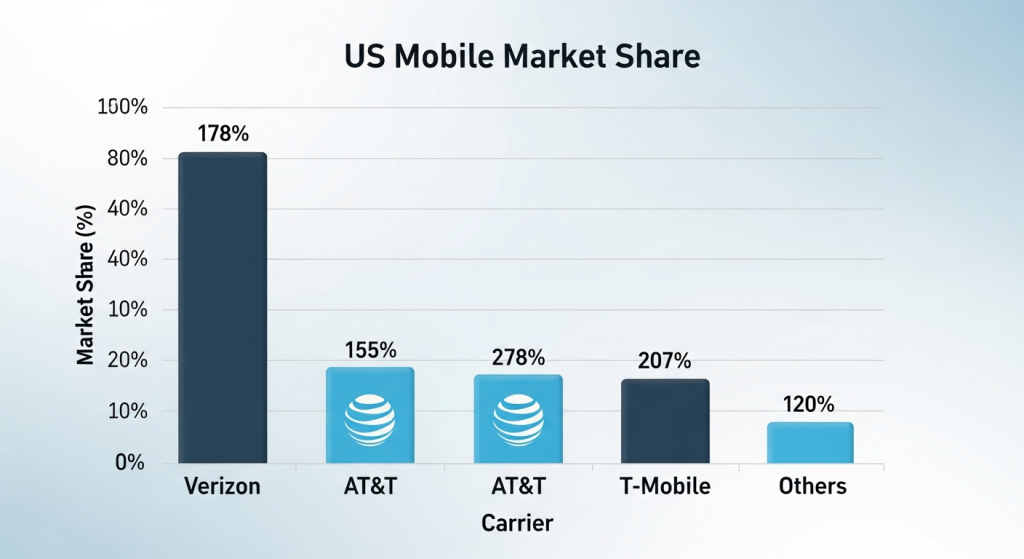
The US mobile market, dominated by Verizon, T-Mobile, and AT&T, is evolving with 5G, MVNO growth, and changing consumer behaviors. Postpaid, prepaid, and regional variations shape competition. Strategic network investments, service bundling, and demographic targeting influence revenue and market share. Emerging technologies and regulatory changes will continue driving shifts in this dynamic telecommunications landscape.
The US mobile market represents one of the most competitive and lucrative telecommunications landscapes globally. With over 300 million mobile subscribers and billions in annual revenue, understanding market share dynamics has become crucial for investors, industry professionals, and consumers alike.
This comprehensive analysis examines the current state of US mobile market share, exploring how major carriers have positioned themselves, what trends are shaping the industry, and what these shifts mean for the future of mobile communications. Whether you’re evaluating carrier options, analyzing investment opportunities, or simply curious about the telecommunications landscape, this breakdown provides the insights you need.
The mobile market’s evolution reflects broader changes in consumer behavior, technology adoption, and competitive strategy. From the dominance of traditional carriers to the rise of prepaid options and mobile virtual network operators (MVNOs), the landscape continues to evolve rapidly.
Current US Mobile Market Leaders
The US mobile market remains dominated by three major carriers, though their relative positions have shifted significantly over the past decade. These carriers control the vast majority of subscribers and revenue, while smaller players compete for specific market segments.
Verizon Wireless
Verizon maintains its position as the largest US mobile carrier by subscriber count, serving approximately 93 million postpaid customers. The carrier’s strength lies in its extensive 4G LTE network coverage and early 5G deployment, particularly in urban markets.
Verizon’s market strategy focuses on premium services and business customers, which has allowed them to maintain higher average revenue per user (ARPU) compared to competitors. Their network reliability and coverage in rural areas continue to be significant competitive advantages.
T-Mobile US
Following its merger with Sprint in 2020, T-Mobile has emerged as a formidable competitor with approximately 110 million customers across all service types. The merger significantly expanded T-Mobile’s network capacity and spectrum holdings, enabling more aggressive pricing strategies.
T-Mobile’s “Un-carrier” initiatives have consistently challenged industry norms, from eliminating contracts to including international roaming. Their focus on customer experience and value propositions has driven substantial subscriber growth, particularly among younger demographics.
AT&T Mobility
AT&T rounds out the “Big Three” with roughly 65 million postpaid wireless customers. The carrier has focused on integrating its wireless services with broader telecommunications and entertainment offerings, including HBO Max and other Warner Media properties.
AT&T’s nationwide 5G network deployment and business-focused services help differentiate the carrier, though intense competition has pressured both subscriber growth and pricing power.
Market Share by Subscriber Count
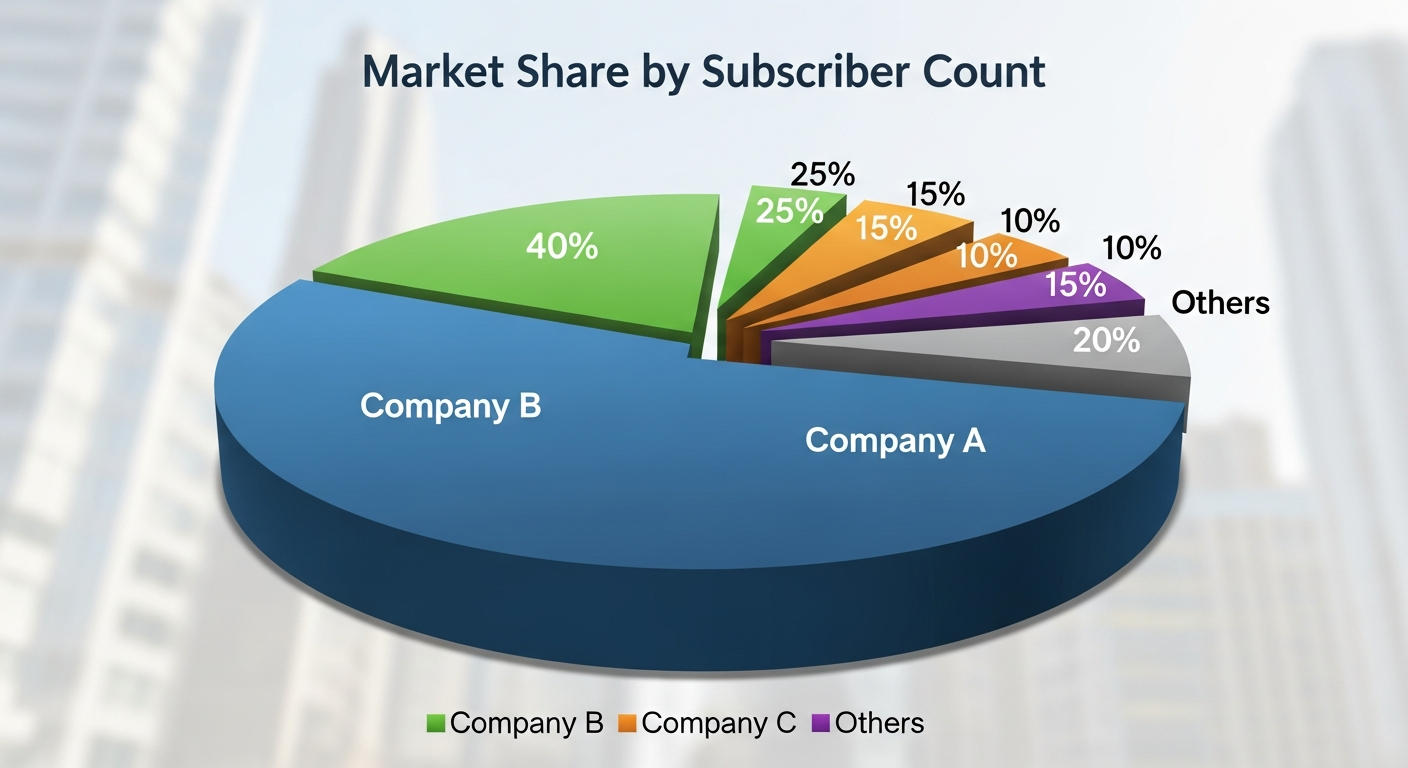
Understanding market share requires examining different metrics, as carriers serve various customer segments with distinct service plans and pricing structures.
Postpaid Market Dynamics
The postpaid market, representing customers with monthly contracts, generates the highest revenue per subscriber and remains the primary battleground for major carriers. Verizon leads this segment, followed closely by T-Mobile and AT&T.
Postpaid customers typically exhibit lower churn rates and higher data consumption, making them particularly valuable for carriers investing heavily in network infrastructure. Competition for these customers has intensified, with carriers offering device promotions, streaming service bundles, and family plan discounts.
Prepaid and Budget Segments
The prepaid market has experienced significant growth, driven by cost-conscious consumers and immigrants seeking flexible service options. T-Mobile’s Metro brand, Verizon’s Visible, and AT&T’s Cricket Wireless compete alongside independent MVNOs for these customers.
Prepaid services now offer many features previously exclusive to postpaid plans, including unlimited data options and device financing. This convergence has blurred traditional market boundaries and intensified price competition.
Geographic Market Variations
Mobile market share varies significantly across different regions, reflecting local network quality, demographic preferences, and competitive dynamics.
Urban vs Rural Coverage
Rural markets often favor Verizon and AT&T due to their extensive network coverage in less populated areas. These carriers invested early in rural infrastructure, creating sustainable competitive advantages that newer entrants struggle to match.
Urban markets show more balanced competition, with T-Mobile’s network density improvements enabling stronger performance in cities. The availability of multiple strong network options has intensified price competition in metropolitan areas.
Regional Carrier Influence
Regional carriers like U.S. Cellular maintain meaningful market share in specific geographic areas, often providing superior customer service and local market knowledge. These carriers typically focus on rural and small-town markets where national carriers may have weaker network presence.
Technology and Network Evolution
The transition to 5G networks has created new competitive dynamics, as carriers race to deploy next-generation services while managing substantial infrastructure investments.
5G Deployment Strategies
Each major carrier has pursued different 5G strategies, affecting their competitive positioning. T-Mobile’s mid-band spectrum advantage, acquired through the Sprint merger, has enabled broader 5G coverage with meaningful speed improvements.
Verizon initially focused on millimeter-wave 5G in dense urban areas, providing extremely high speeds in limited coverage areas. AT&T has pursued a balanced approach, combining low-band and mid-band spectrum for nationwide coverage.
Network Investment Impact
The billions invested in 5G infrastructure represent both opportunities and risks for carriers. Success requires not only network deployment but also development of applications and services that justify premium pricing for enhanced network capabilities.
Market Share Revenue Analysis
Subscriber count alone doesn’t tell the complete market share story, as revenue per customer varies significantly across different service tiers and customer segments.
Average Revenue Per User
Verizon typically generates the highest ARPU among major carriers, reflecting their premium positioning and business customer focus. This revenue advantage partially offsets lower subscriber growth rates compared to competitors.
T-Mobile’s ARPU has gradually increased following network improvements and service enhancements, though their value-oriented positioning maintains pressure on pricing. AT&T’s ARPU reflects their mixed consumer and business customer base.
Service Bundle Impact
Carriers increasingly bundle wireless services with other telecommunications, entertainment, and digital services. These bundles complicate direct market share comparisons while creating additional revenue opportunities and customer retention benefits.
Emerging Competition and Disruption
The mobile market faces potential disruption from new technologies, business models, and competitive entrants that could reshape traditional market share dynamics.
MVNO Growth
Mobile Virtual Network Operators continue expanding their market presence by offering specialized services or aggressive pricing. Companies like Mint Mobile, Visible, and Google Fi demonstrate how focused value propositions can attract specific customer segments.
MVNOs benefit from lower operational costs and targeting flexibility, though they remain dependent on network access agreements with major carriers. Their growth reflects increasing consumer willingness to switch carriers for better value.
Satellite and Alternative Technologies
Emerging satellite internet services and fixed wireless solutions create new competitive pressures for traditional mobile carriers. These technologies may serve previously underserved markets or provide backup connectivity options.
The integration of satellite capabilities into smartphones, as demonstrated by recent iPhone features, suggests potential convergence between terrestrial and satellite communication services.
Future Market Projections
Several trends will likely influence US mobile market share over the coming years, from technological advancement to changing consumer preferences and regulatory developments.
Demographic Shifts
Younger consumers demonstrate higher willingness to switch carriers for better value or features, potentially benefiting challengers over established market leaders. Social media influence and peer recommendations increasingly affect carrier selection decisions.
The growing importance of data privacy and security may favor carriers with strong reputations in these areas, potentially creating new competitive advantages beyond traditional network quality metrics.
Regulatory Considerations
Government policies regarding spectrum allocation, merger approvals, and competition enforcement will continue shaping market dynamics. Recent regulatory focus on market concentration suggests continued scrutiny of major carrier activities.
Rural broadband initiatives and infrastructure investment programs may alter competitive dynamics in previously underserved markets, potentially creating opportunities for smaller carriers or new entrants.
Overview of the US Mobile Market
The US mobile market is one of the largest and most competitive globally, with over 300 million subscribers generating billions in annual revenue. Rapid technological advancements, evolving consumer behavior, and aggressive carrier strategies shape market dynamics. Understanding market share is crucial for investors, industry analysts, and consumers evaluating carrier options. Major players like Verizon, T-Mobile, and AT&T dominate subscriber counts and revenue, while smaller carriers and MVNOs compete in niche segments. The market is increasingly influenced by 5G deployment, prepaid service growth, and emerging satellite or fixed wireless technologies. Studying these dynamics offers insight into trends, revenue streams, competitive strategies, and future growth opportunities in the US telecommunications landscape.
Strategic Implications for the Industry

The current state of US mobile market share reflects successful strategies from major carriers while highlighting opportunities for disruption and growth. Understanding these dynamics provides valuable insights for industry participants, investors, and consumers.
Successful carriers have balanced network investment, customer acquisition costs, and service differentiation to build sustainable competitive advantages. The most effective strategies combine superior network quality with compelling value propositions and customer experience innovations.
Market share leadership requires continuous adaptation as technology evolves and consumer preferences shift. The carriers best positioned for future success will likely be those that anticipate and respond effectively to emerging trends while maintaining operational excellence in core services.
The US mobile market’s ongoing evolution ensures that current market share positions, while significant, remain subject to change based on strategic execution, technological advancement, and competitive innovation.
Conclusion
The US mobile market remains highly competitive, led by Verizon, T-Mobile, and AT&T. 5G deployment, MVNO growth, and evolving consumer preferences are reshaping market share. Strategic investments in networks, bundles, and digital services are critical. Carriers that balance technology, value, and customer experience will maintain leadership in a rapidly evolving landscape.
Frequently Asked Questions (FAQ) – US Mobile Market
-
Who are the top US mobile carriers?
Verizon, T-Mobile, and AT&T dominate the US mobile market in terms of subscriber count, network coverage, and revenue. These carriers control the majority of postpaid and prepaid users, with strong brand recognition and extensive service offerings across both urban and rural areas. -
What is the difference between postpaid and prepaid?
Postpaid plans require contracts and typically offer higher Average Revenue Per User (ARPU), premium services, and device financing. Prepaid plans are flexible, no-contract options that appeal to cost-conscious users, often including unlimited data and features once exclusive to postpaid customers. -
How has T-Mobile grown so quickly?
T-Mobile’s growth stems from the Sprint merger, access to mid-band 5G spectrum, and innovative “Un-carrier” initiatives. These initiatives focus on eliminating contracts, enhancing customer experience, and offering competitive pricing, attracting younger users and value-conscious consumers nationwide. -
Why is Verizon considered a premium carrier?
Verizon is known for reliable nationwide coverage, especially in rural areas, superior network quality, and business-focused services. Its premium positioning allows for higher ARPU, lower churn, and strong customer loyalty compared to competitors. -
What role do MVNOs play in the market?
Mobile Virtual Network Operators (MVNOs) provide affordable, flexible plans by leasing network access from major carriers. They target niche and value-conscious segments, increase competition, and push larger carriers to innovate and improve pricing, services, and customer experience. -
How is 5G changing market share?
5G differentiates carriers through network speed, coverage, and service offerings. Carriers with broader and faster 5G networks can attract subscribers seeking high-speed connectivity, AR/VR capabilities, and enhanced mobile experiences, influencing market share dynamics across postpaid and prepaid segments. -
Which areas favor AT&T or Verizon?
Rural markets tend to favor Verizon and AT&T due to their long-standing investment in nationwide infrastructure. Their extensive network coverage ensures connectivity in less populated areas where smaller carriers or T-Mobile may have limited reach. -
Do service bundles affect revenue?
Yes. Bundling wireless services with entertainment, broadband, or digital offerings increases ARPU, improves customer retention, and provides additional revenue streams. Bundles also create competitive differentiation, though they complicate direct comparisons of subscriber numbers alone. -
What demographic trends impact carriers?
Younger consumers often switch carriers for better value, pricing, or new features. Social media, peer influence, and app-based service management impact carrier choice. Privacy, network reliability, and customer support influence loyalty across all age groups. -
Are satellite and fixed wireless services a threat?
Emerging technologies, including satellite internet and fixed wireless, may disrupt traditional mobile markets. They can provide connectivity in underserved areas or offer backup options, forcing traditional carriers to adapt strategies and invest in innovative services. -
How do ARPU and subscriber counts differ?
Subscriber count measures total users, but ARPU (Average Revenue Per User) assesses revenue generated per customer. A carrier with fewer users may earn more revenue if it has higher ARPU, highlighting profitability beyond raw subscriber numbers. -
Will MVNOs continue to grow?
Yes. MVNOs continue attracting value-conscious consumers, offering specialized or flexible services. Their growth encourages innovation among major carriers, increases competition, and expands options for consumers, particularly in budget and prepaid segments.