Augmented Reality in Mobile Marketing: Crafting Immersive Customer Experiences

Augmented reality is transforming mobile marketing by delivering immersive, interactive brand experiences. By blending digital content with the physical world, AR increases engagement, improves product understanding, and drives conversions. When executed strategically, AR campaigns create memorable interactions and measurable business impact across mobile channels.
In an increasingly competitive digital landscape, brands need innovative ways to capture attention and drive deeper engagement. Augmented reality (AR) has emerged as a game-changing technology that overlays digital content onto the physical world, enabling mobile marketers to deliver interactive, memorable experiences.
Why AR Matters for Modern Mobile Campaigns

Top AR Use Cases in Mobile Marketing
From e-commerce to entertainment, augmented reality is transforming how brands engage audiences across industries. When implemented strategically, AR delivers measurable impact by enhancing user experience, confidence, and interaction. Below are the leading AR use cases driving results today:
1. Virtual Try-On Experiences
Beauty, fashion, and accessory brands use AR to let customers virtually try makeup, eyewear, shoes, or clothing through their device cameras. This interactive preview helps shoppers visualize products in real time, reducing uncertainty and purchase hesitation. As a result, brands often see higher conversion rates and fewer returns. Common implementations include in-app try-ons and AR smart mirrors in retail environments.
2. Interactive Product Demos
AR-powered product demos allow customers to place true-to-scale 3D models of furniture, home appliances, or electronics directly into their own spaces. By visualizing products in context—size, color, and functionality—buyers gain greater confidence before purchasing. This approach is especially effective for high-consideration items, improving conversions while minimizing post-purchase dissatisfaction.
3. Location-Based AR Campaigns
Location-aware AR experiences activate digital content tied to physical places such as stores, landmarks, or event venues. For example, a restaurant can display a floating digital menu near its entrance, or a theme park app can animate characters within the park environment. These geo-triggered experiences drive foot traffic, boost engagement, and create memorable, shareable moments that extend campaign reach.
Together, these use cases show how AR turns mobile marketing into an immersive, value-driven experience—bridging the gap between digital interaction and real-world context.
Best Practices for AR Mobile Marketing
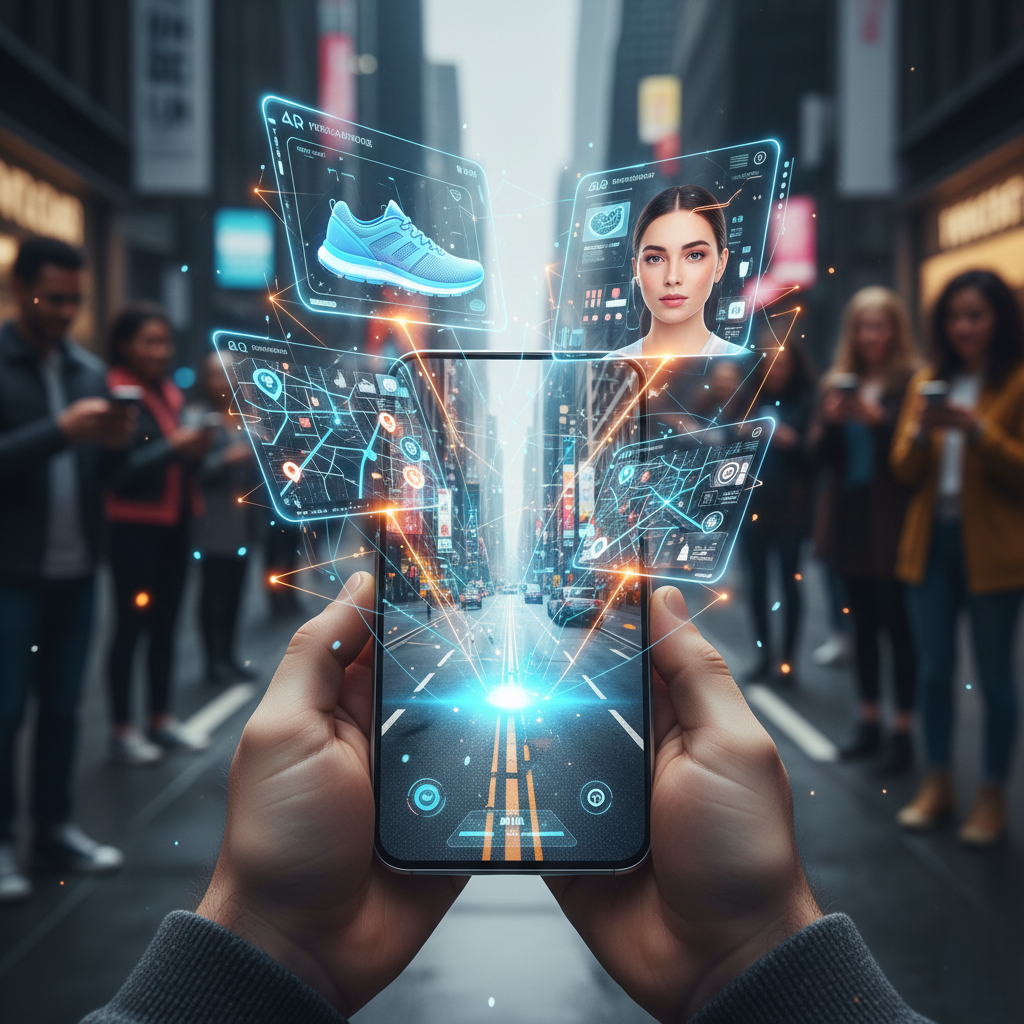
To unlock the full potential of augmented reality in mobile campaigns, brands must balance creativity with usability and performance. The following best practices help ensure AR experiences are engaging, effective, and aligned with business objectives:
Focus on Utility
Design AR experiences that solve real problems or enhance the user journey. Whether it’s helping customers visualize a product or guiding them through a decision, practical value drives adoption far more than novelty alone.
Ensure Smooth Performance
Performance can make or break an AR experience. Optimize 3D assets, animations, and code to reduce load times, prevent crashes, and limit battery consumption across both iOS and Android devices. A seamless experience keeps users engaged longer.
Promote Social Sharing
Encourage organic reach by integrating easy social sharing options. When users can quickly share their AR experiences on social platforms, your campaign gains visibility, credibility, and peer-driven promotion.
Use Clear Calls to Action (CTAs)
Guide users throughout the AR journey with intuitive on-screen prompts. End each experience with a strong, clear CTA—such as making a purchase, downloading an app, or visiting a physical store—to convert engagement into measurable outcomes.
Measure Engagement Metrics
Track key performance indicators like dwell time, repeat interactions, social shares, and conversions. These insights help quantify ROI and inform ongoing optimization for future AR initiatives.
By following these best practices, brands can create AR mobile marketing campaigns that are not only immersive and memorable but also strategically effective and results-driven.
Choosing the Right AR Technology Stack
Several AR development platforms can accelerate your mobile projects, each with unique strengths:
- ARKit (iOS): Apple’s framework delivers high-fidelity tracking and 3D object detection for iPhone and iPad apps.
- ARCore (Android): Google’s AR toolkit provides robust motion tracking, environmental understanding, and light estimation.
- Unity & Unreal Engine: Popular game engines that support cross-platform AR experiences with advanced graphics capabilities.
- WebAR Platforms: Tools like 8th Wall and ZapWorks deliver browser-based AR without requiring app downloads, ideal for low-friction campaigns.
Measuring Success: KPIs for AR Campaigns
To demonstrate the true impact of augmented reality in mobile marketing, it’s essential to track the right performance metrics. These key performance indicators (KPIs) help quantify engagement, influence on purchasing behavior, and overall return on investment:
Engagement Rate
Measures the percentage of users who launch and actively complete the AR experience. A high engagement rate indicates that the experience is compelling, intuitive, and relevant to the audience.
Average Session Duration
Tracks how long users spend interacting with AR content. Longer session times suggest deeper immersion and stronger interest, signaling that the experience successfully holds attention beyond initial curiosity.
Social Shares
Counts how often users share their AR experience on social platforms. High share volumes reflect strong novelty and emotional appeal, extending campaign reach organically and increasing brand visibility.
Conversion Lift
Assesses the increase in purchases, sign-ups, or other desired actions directly influenced by AR interactions. This KPI is critical for tying immersive experiences to tangible business outcomes.
Return on Ad Spend (ROAS)
Calculates the revenue generated from the AR campaign relative to advertising costs. A positive ROAS confirms that AR is not just engaging, but also financially effective.
By consistently monitoring these KPIs, marketers can evaluate AR performance, optimize experiences, and make data-driven decisions that maximize the long-term value of immersive mobile campaigns.
Overcoming Common AR Challenges
While augmented reality offers powerful opportunities for mobile marketing, successful implementation requires careful planning to overcome common challenges. Addressing these hurdles early helps ensure smooth execution, user trust, and measurable results.
Hardware Fragmentation
AR experiences must perform consistently across a wide range of smartphones and operating systems. Differences in camera quality, processing power, and sensor capabilities can affect performance. Thorough testing across popular devices and OS versions is essential to deliver a reliable and inclusive user experience.
Content Production Costs
Creating high-quality 3D assets and interactive environments can be resource-intensive. To manage costs, brands can reuse modular 3D components, adopt scalable design systems, and leverage existing asset libraries or templates. This approach reduces development time while maintaining visual quality.
User Privacy Concerns
Because AR relies on camera access and real-world data, transparency is critical. Clearly explain why permissions are required, how data is used, and how privacy is protected. Adhering to regulations such as GDPR and CCPA builds trust and reassures users about data security.
Discoverability
Even the best AR experience delivers little value if users don’t know it exists. Increase visibility through social media previews, in-app prompts, push notifications, email campaigns, and QR codes placed on packaging or in physical locations. Clear instructions and strong incentives can further encourage participation.
By proactively addressing these challenges, brands can reduce friction, enhance user confidence, and unlock the full potential of AR as a high-impact mobile marketing channel.
Future Trends in Mobile AR Marketing

As augmented reality continues to evolve, emerging technologies and consumer expectations will push mobile AR marketing toward more immersive, intelligent, and scalable experiences. The following trends are set to redefine how brands connect with audiences:
Persistent AR
Persistent AR allows digital objects and experiences to remain anchored in specific real-world locations over time. Users can return to the same place and see the same AR content, creating ongoing engagement rather than one-time interactions. This opens new opportunities for location-based storytelling, retail experiences, and branded environments that evolve over multiple visits.
AI-Driven Interactions
Artificial intelligence will make AR experiences smarter and more personalized. Advanced object recognition, gesture detection, and context-aware content will enable AR to respond dynamically to user behavior and surroundings. As a result, brands can deliver highly relevant, adaptive experiences that feel intuitive and human-like.
Social AR Collaboration
Social AR introduces shared, multi-user environments where people can interact with the same digital elements simultaneously. Friends, families, or communities can engage together in real time, whether for games, virtual events, or collaborative shopping experiences. This trend enhances engagement and encourages organic sharing through social interaction.
5G-Enabled Rich Media
The rollout of 5G networks will significantly enhance AR capabilities by enabling low-latency, high-bandwidth content delivery. Marketers will be able to stream complex 3D models, animations, and video overlays in real time without performance limitations, creating smoother, more visually rich AR experiences.
Together, these trends signal a shift toward always-on, intelligent, and socially connected AR experiences—positioning mobile AR as a core pillar of future digital marketing strategies.
Getting Started: A Step-By-Step AR Roadmap
Conclusion
Augmented reality represents a powerful frontier for mobile marketing, offering unmatched opportunities to captivate audiences and differentiate your brand. By focusing on user value, choosing the right technology, and rigorously measuring performance, you can craft AR campaigns that not only drive engagement but also deliver measurable business results. Start small, learn fast, and scale strategically to harness the full potential of AR in your next mobile marketing initiative.
Ready to elevate your mobile marketing with augmented reality? Begin planning your first AR experience today and stay ahead in the age of immersive digital engagement.
Frequently Asked Questions (FAQ)
1. What is augmented reality (AR) in mobile marketing?
Augmented reality overlays digital elements—such as 3D models, animations, or information—onto real-world environments through mobile devices, creating interactive and immersive brand experiences.
2. Why is AR effective for mobile marketing campaigns?
AR leverages smartphone capabilities to deliver engaging, hands-on experiences that outperform static ads, increasing dwell time, brand recall, and conversion rates.
3. Which industries benefit most from AR marketing?
Retail, e-commerce, beauty, fashion, real estate, travel, entertainment, and consumer electronics see strong results, especially through virtual try-ons and interactive product demos.
4. Do AR campaigns require a mobile app?
Not always. While in-app AR offers deeper experiences, WebAR allows users to access AR directly through a mobile browser without downloading an app, reducing friction.
5. How can brands measure AR campaign success?
Key metrics include engagement rate, session duration, social shares, conversion lift, and return on ad spend (ROAS).
6. Is AR marketing expensive to implement?
Costs vary by complexity, but brands can start small using modular 3D assets, WebAR platforms, or pilot campaigns before scaling.
7. Are there privacy concerns with AR?
Yes. Brands must clearly disclose camera usage, follow data protection regulations like GDPR and CCPA, and prioritize transparency and user consent.
8. What is the future of AR in mobile marketing?
Emerging trends include persistent AR, AI-driven personalization, social multi-user experiences, and richer content powered by 5G connectivity.